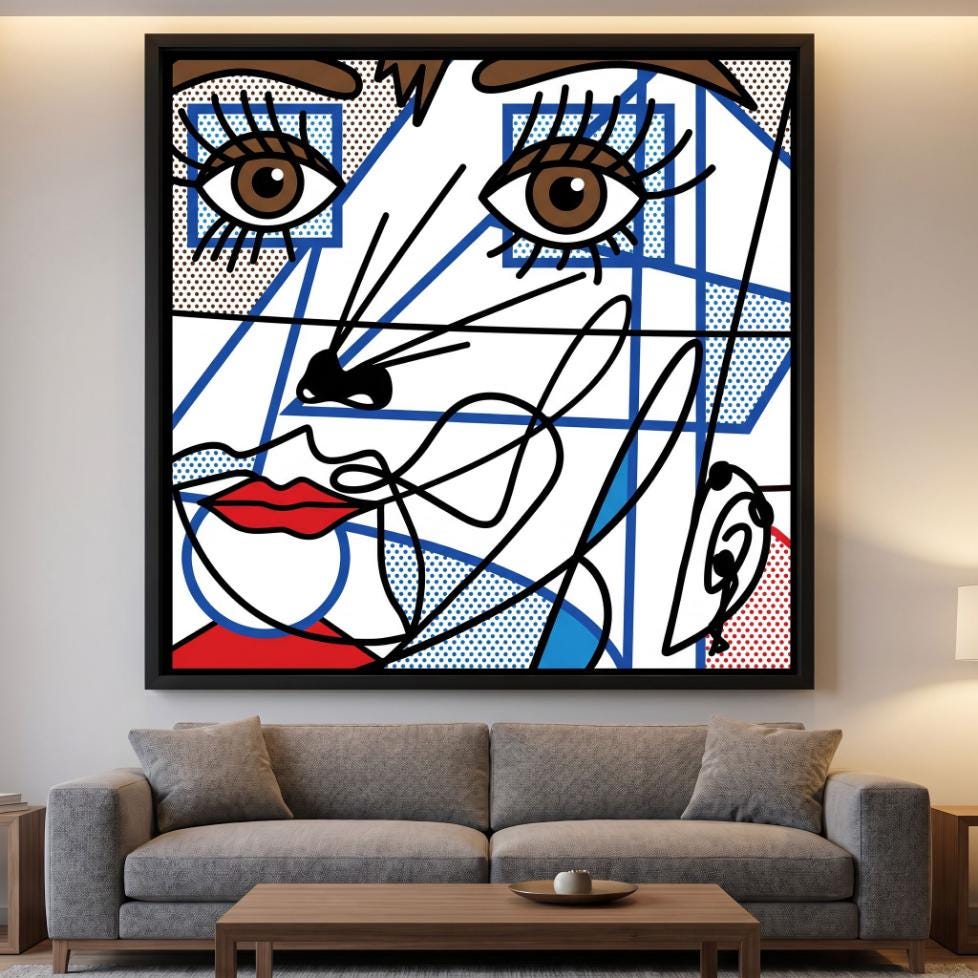
Art is the language of the subconscious mind. It is the echo of turbulent memories searching for resolution — fragments of emotion struggling to free themselves from the prison of the mind and dissolve into the soul, eventually seeking oneness. Human beings create not merely to entertain, but to survive internally. Art is evidence of psychological movement, of the invisible trying to become visible. Perhaps this is why art has always existed alongside suffering. It translates chaos into symbols. It allows the individual to externalize fear, desire, trauma, longing, and love. Without expression, the subconscious decays into silence. Love itself can emerge through art when meaningful elements signal the deeper desires of the anima — the hidden emotional self seeking connection beyond superficial attraction. Yet modern society often confuses love with desire and sexuality. At the biological level, all primates share instinctual drives. We are animals shaped by impulses of survival, attraction, dominance, and fear. The human condition is not defined by the absence of instinct, but by the attempt to transform it. What, then, separates civilization from savagery? Art may be the missing link. Even prehistoric cave paintings reveal this truth. Early humans painted animals, rituals, and symbols on cave walls not because they had mastered nature, but because they feared it, worshipped it, and sought to understand their place within it. The primitive human already needed expression. The savage reaction to the world was never enough on its own. Something deeper demanded form. Today, despite technological advancement, humanity remains psychologically primitive in many ways. Men and women compete endlessly for validation, desirability, and power, attempting to elevate themselves like gods and goddesses in the eyes of others. Social performance replaces authentic connection. Desire becomes commodified. Identity becomes spectacle. Art has also become commercialized. In the age of mass production and digital replication, everyone can create endlessly from fragments, templates, and algorithms — like children arranging dolls and miniature worlds. Creation itself is no longer rare. Meaning is. The question is no longer whether humans can create art, but whether art can still transform humanity. Can art guide us toward the radical civilization of our primal instincts? Can it teach restraint, empathy, transcendence, and self-awareness? Or does it merely amplify ego, provocation, and chaos under the banner of “freedom of expression”? This raises an uncomfortable contradiction in modern society. Human-made art, regardless of how provocative, violent, sexual, or psychologically manipulative it may be, is often defended in the name of artistic freedom. Yet artificial intelligence-generated art faces immediate calls for regulation, censorship, or even prohibition. Why? If art is fundamentally an extension of consciousness, then both human and artificial systems are participating in symbolic production. The fear surrounding AI art may not simply concern originality or economics, but rather humanity’s fear of losing ownership over expression itself. Humans tolerate dangerous art when it emerges from human suffering because suffering grants authenticity. But when machines generate imagery, writing, or music without pain, people question whether expression without consciousness should possess cultural legitimacy. Still, human art itself has never been fully regulated. Throughout history, art has provoked revolutions, propaganda, obsession, worship, violence, and social transformation. Art influences public opinion more powerfully than politics because it bypasses logic and speaks directly to emotion and instinct. Should there be rules governing art? Perhaps rules are necessary when art becomes purely manipulative or destructive. Yet excessive control risks killing the very function of art: to confront what society suppresses. Art exists precisely because human beings are conflicted creatures struggling between instinct and transcendence. The purpose of art may not be to eliminate our primal nature, but to illuminate it so clearly that we no longer remain enslaved by it. In that sense, true civilization is not technological progress. It is psychological evolution. And art — despite its corruption, commercialization, and contradictions — may still be one of the few paths capable of leading humanity there.
Art, Instinct, and the Civilization of the Human Soul